Agriculture
The Nadorcott mandarin and the INRA station
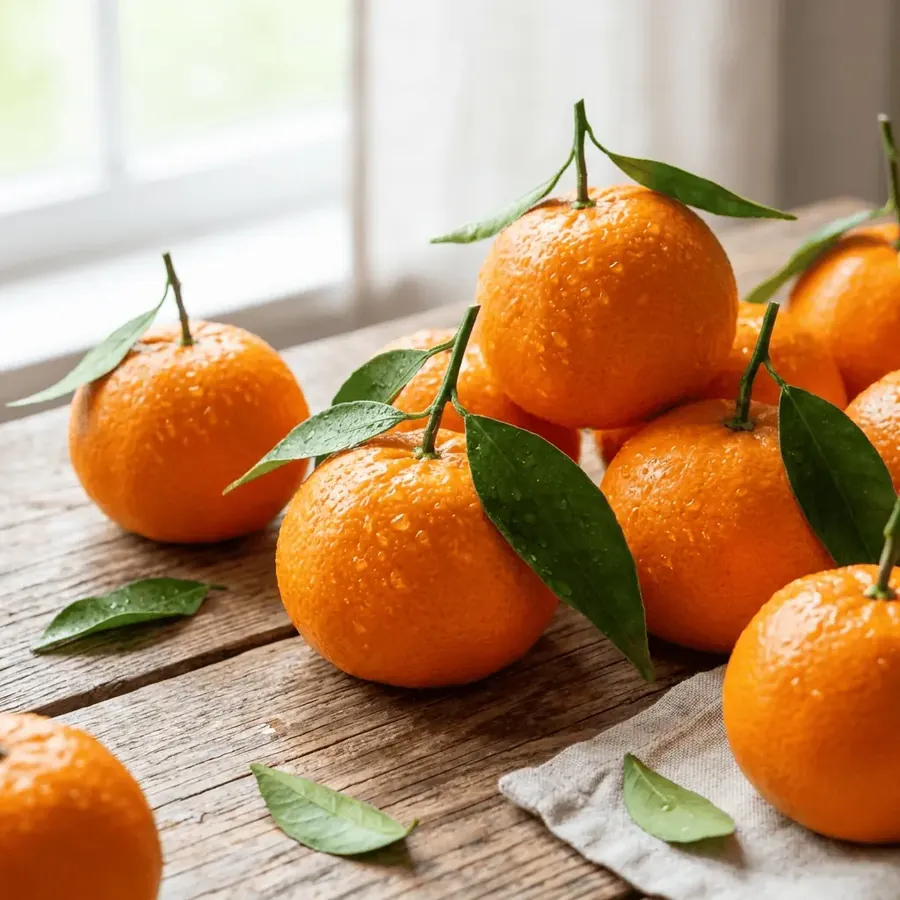
A chance seedling in a research plot outside Afourar became one of the most widely planted easy-peel citrus varieties in the world.
The station
Why a citrus collection ended up outside Afourar
When the Bin El Ouidane water reached the Tadla in the 1950s, Morocco suddenly had tens of thousands of irrigated hectares that had never grown a permanent crop. Citrus was an obvious candidate — high value, exportable — but nobody knew which varieties and rootstocks would perform in this particular combination of heat, water and soil.
The answer was an experimental domain. The INRA Domaine Expérimental d’Afourer, part of the institute’s Tadla regional research centre, sits on the Beni Mellal–Marrakech road at the Afourar junction. Citrus germplasm collections were established there from the 1960s; today the national collection runs to more than 500 citrus accessions, used for variety and rootstock selection.
It is a working research farm rather than a public site. Its importance to this town is simply that it existed — because of what grew in one of its plots.
The discovery
One seedling, 1982
The Nadorcott was not bred to a specification. It was noticed.
- 1964
Murcott trees go in
A block of Murcott mandarins is planted at the Afourer station as part of the citrus collection.
- 1977
Crossing work begins
Dr El-Bachir Nadori carries out crosses using Murcott as a parent, within a nucellar selection programme.
- 1982
The seedling is identified
Among the by-then 18-year-old Murcott trees, Nadori finds a seedling with better colour, better flavour and a rind that comes away cleanly. It is believed to be the result of chance cross-pollination, with Murcott as the seed parent and an unknown pollen parent. It is recorded under the plot code INRA W — the origin of the name W. Murcott Afourer.
- 1988
The seedlessness is understood
Observing five-year-old trees of the selection, Nadori establishes that the fruit sets almost no seed provided the trees are isolated so that pollen from other citrus cannot reach them. This is not a genetic modification — it is a management condition, and it is why Nadorcott orchards are planted in isolation to this day.
- 1990
First commercial orchards
Les Domaines Agricoles plants the variety commercially for the first time.
- Since
A global variety
Protected by plant breeders’ rights and licensed to growers worldwide, it is sold as Nadorcott — from Nadori and Murcott — and in several markets as Afourer.
The fruit
What makes it commercially unusual
Late season
The Moroccan Nadorcott harvest runs from January to April. That timing is most of the variety’s commercial value: it ripens after clementines have finished, filling the late-winter gap in northern-hemisphere soft-citrus supply when there is little competition.
Seedless — conditionally
Nadorcott is self-incompatible: its own pollen will not set seed. Foreign citrus pollen will. Growers therefore isolate orchards, and in some regions bee-keeping near Nadorcott blocks is restricted during flowering. Fruit from a well-isolated orchard is effectively seedless; fruit from a badly placed one is not, and is worth considerably less.
Protected
The variety is covered by plant breeders’ rights and grown under licence, and the rights have been enforced through the courts in several countries. This is unusual enough for a mandarin that the Nadorcott is a standard case study in agricultural intellectual property.
Grown almost everywhere except here
An honest note: Afourar is the origin of the Nadorcott, not its production centre. Morocco’s commercial plantings are concentrated in Souss-Massa, the Marrakech region, Berkane and the Gharb, across more than 3,000 growers; roughly 325,000 tonnes were exported in the 2024/25 season. What Afourar has is the plot where it started.
Around the town
The rest of the harvest
Citrus is only part of what the irrigated plain produces. Driving out of Afourar in any direction you pass olives — the dir is classic olive country, and small presses work through the late-autumn harvest — along with sugar beet, cereals, alfalfa and fodder maize, market vegetables, and pomegranates and quinces in garden plots.
In the hills behind the town the pattern changes completely: rain-fed barley on terraces, walnut and almond trees, sheep and goats moved seasonally, and honey. Much of what appears on the market stalls one morning a week comes down from exactly there.