Geography & climate
Where the town sits, why the water arrives here, and what the weather actually does — month by month.
Explore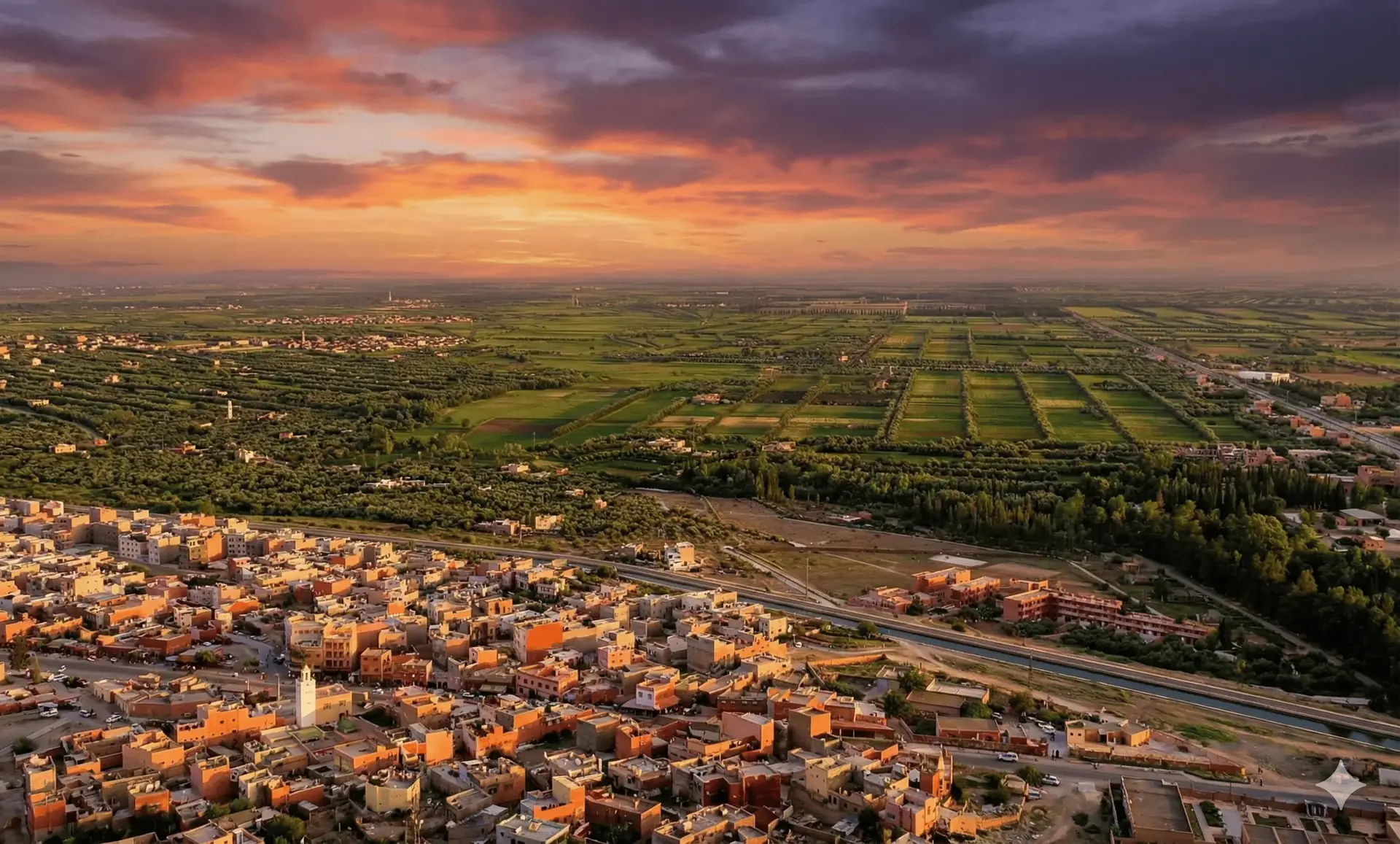
Azilal Province · Béni Mellal-Khénifra · Morocco
A town of thirteen thousand people with an outsized story: a 465 MW water battery buried in the hills above it, a mandarin that carries its name onto four continents, and the last flat ground before the road climbs to Bin El Ouidane.
Orientation
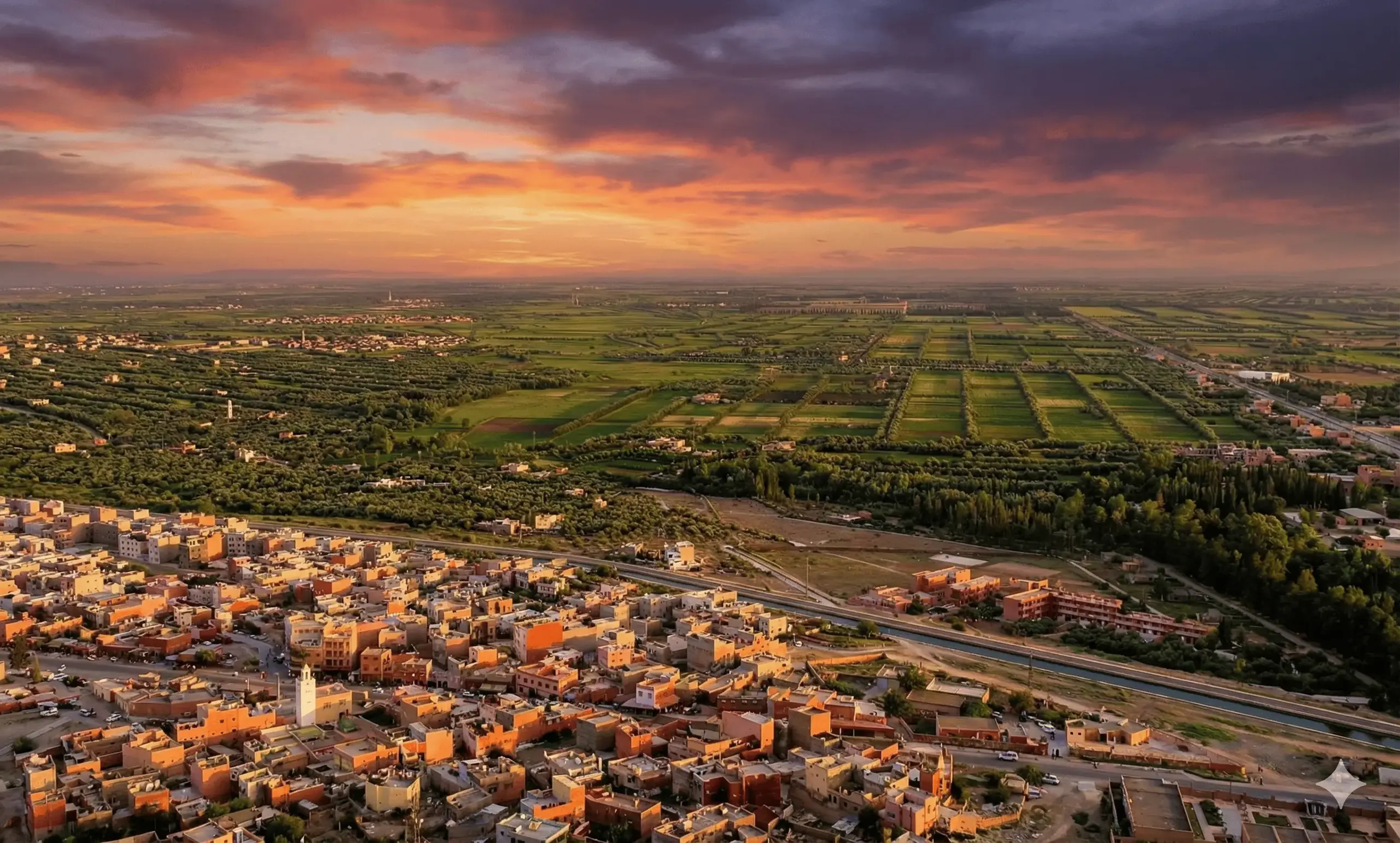
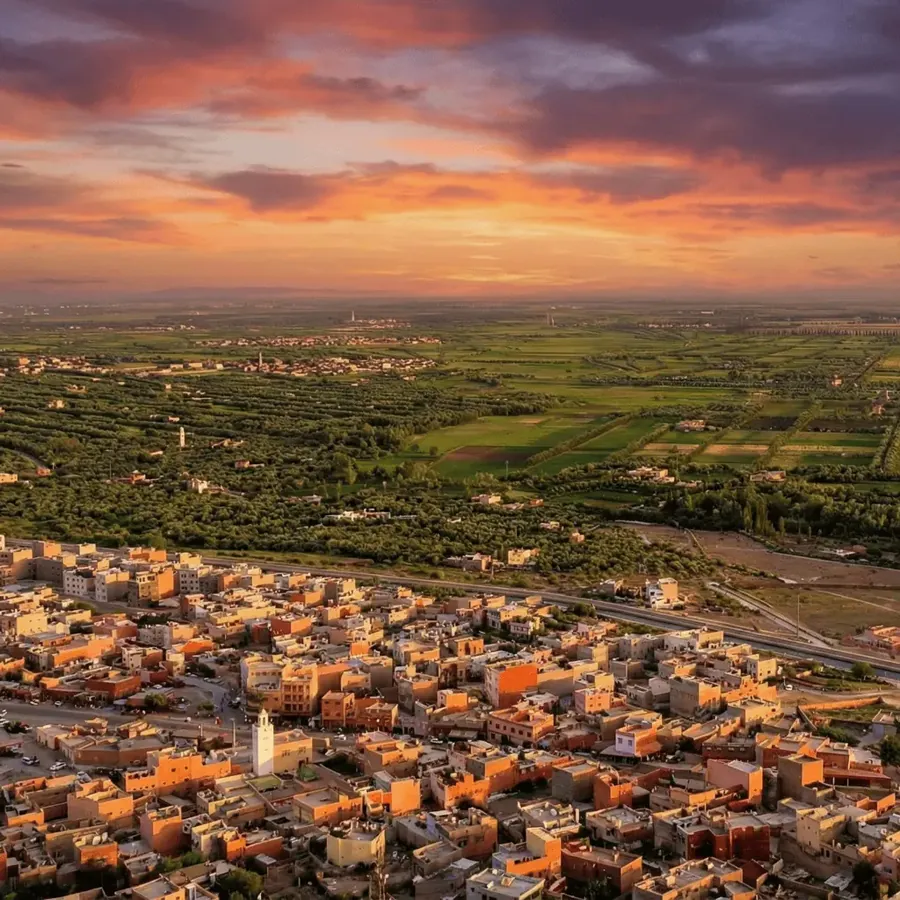
Morocco's central plains stop abruptly here. North of Afourar the Tadla is flat, irrigated and Arabic-speaking; south of it the ground rises into the Central High Atlas, Tamazight-speaking and vertical. Almost everything interesting about the town comes from sitting on that line.
Afourar — also written Afourer, and أفورار in Arabic — is a municipality of about 13,000 people in Azilal Province, 29 km south-west of Beni Mellal. It sits in the dir, the narrow piedmont belt where mountain water reaches the plain, which is why there has been farming here far longer than there has been a town.
Modern Afourar was shaped by one decision: to dam the El Abid river at Bin El Ouidane in 1949. The dam brought engineers, a power grid, a canal network across the Tadla and, eventually, a state agricultural research station. Each of those left something behind that the town still lives on.
The subjects
Where the town sits, why the water arrives here, and what the weather actually does — month by month.
ExploreFrom piedmont farmland to a dam-builders’ town: the 1940s hydraulic works, the garden-city quarter, and what came after.
Explore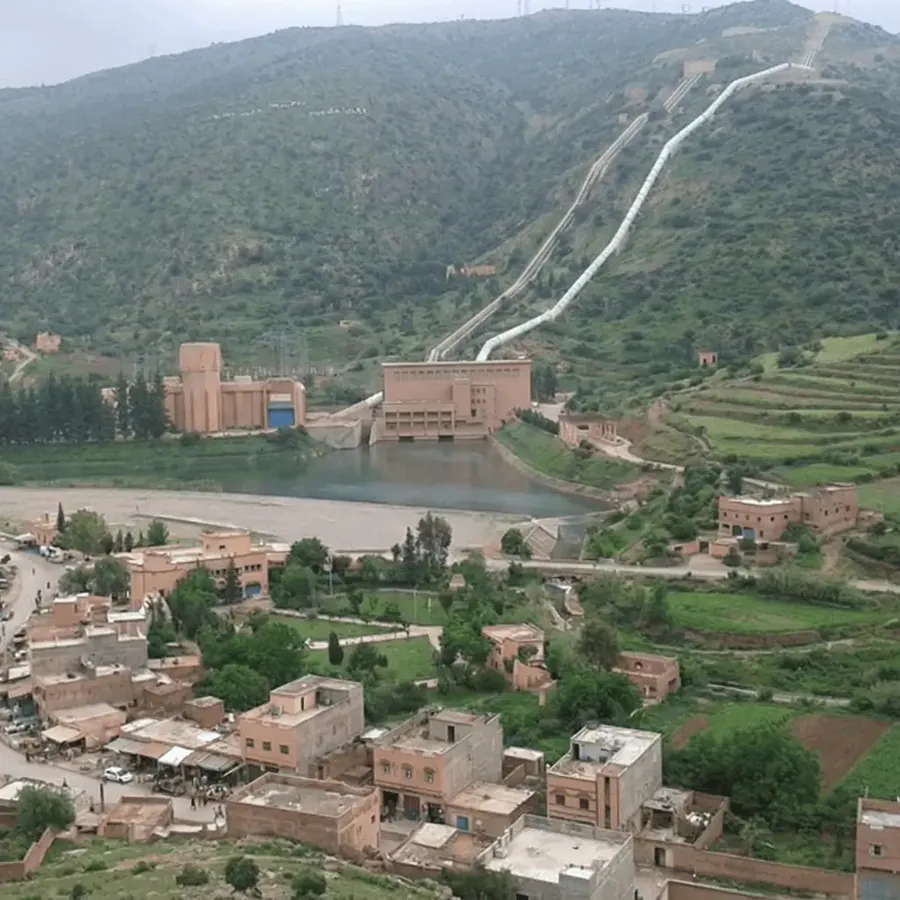
The 465 MW Afourer pumped-storage station — Morocco’s first, and still one of Africa’s largest water batteries.
Explore
How a chance seedling found at the INRA station in 1982 became one of the world’s most-planted easy-peel citrus varieties.
Explore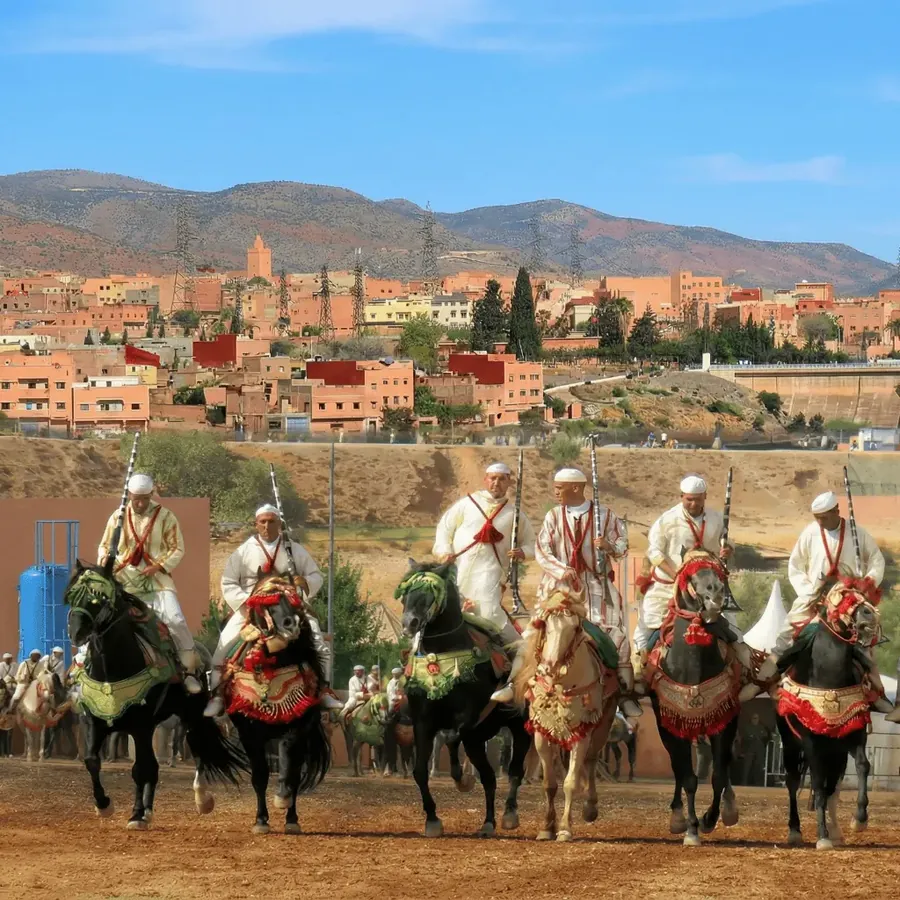
Two languages, two ways of life, one market day — plus tbourida, the horsemen’s festival.
ExploreBin El Ouidane, the Ouzoud falls, the Aït Bougmez road — what Afourar is the gateway to.
ExploreEnergy
When Morocco’s grid has more electricity than it needs, Afourar pumps water 800 metres uphill. When the country switches its lights on, it lets the water back down.
The Afourer pumped-storage station — Station de Transfert d’Énergie par Pompage, STEP — was commissioned in 2004 and was the first of its kind in Morocco. Two 172.5 MW and two 60 MW reversible Francis machines move water between a reservoir at about 1,280 m and one at about 480 m, through shafts and galleries cut into the mountain.
Its water comes from the Aït Ouarda dam on the El Abid, itself fed from the Bin El Ouidane reservoir upstream. The white penstocks running straight down the hillside above the town are the most visible piece of industrial infrastructure for a hundred kilometres.
Agriculture
If you have eaten an easy-peel mandarin in February, there is a fair chance it traces back to one tree in a research plot outside Afourar.
In 1982, Dr El-Bachir Nadori noticed a seedling growing among Murcott mandarin trees that had been planted at the INRA experimental station at Afourer in 1964. It peeled easily, coloured well and tasted better than its neighbours. Given the plot code INRA W, it entered the record as W. Murcott Afourer and was later named Nadorcott, from its finder’s name and its parent’s.
In 1988 Nadori established that the fruit sets almost no seed when the trees are isolated from other citrus pollen. Commercial planting began in 1990. Four decades on, Morocco alone exported around 325,000 tonnes of Nadorcott in the 2024/25 season, and the variety is grown from California to Australia — often under the trade name Afourer.
Visiting
Afourar is 35 minutes from Beni Mellal and 45 minutes below the Bin El Ouidane lake. Most people pass through it. It repays stopping.
Driving routes and real distances from Casablanca, Marrakech, Rabat and Fes, plus buses, grand taxis and the nearest airports.
Routes & timesHonest guidance: what Afourar itself offers, and where the hotels, guesthouses and lake lodges actually are.
Sleep & foodBin El Ouidane, the Ouzoud falls, Aïn Asserdoun, Azilal and the road into the Aït Bougmez valley.
Day tripsSafety, best season, souk day, languages, whether you need a car — fifteen straight answers.
Read the FAQOn the map
Common questions
Afourar is a town in Azilal Province, in the Béni Mellal-Khénifra region of central Morocco, at roughly 32.21°N, 6.55°W and about 450–500 m above sea level. It lies 29 km south-west of Beni Mellal on the N25 (also signposted R304), the road that climbs from the Tadla plain to the Bin El Ouidane dam and on to Azilal.
You will see the name written Afourar, Afourer and أفورار — all the same place.
Three things, mostly. It gives its name to the Nadorcott mandarin, the easy-peel citrus selected in 1982 at the INRA research station outside the town and now grown on four continents. It hosts the Afourer pumped-storage hydroelectric station, a 465 MW “water battery” built into the hills above the town. And it is the last town on the plain before the road climbs to Bin El Ouidane, which makes it a natural stop for anyone heading into the Central High Atlas.
The Nadorcott is a late-season, easy-peel mandarin that is seedless when grown away from cross-pollination. It was found in 1982 by Dr El-Bachir Nadori at the INRA experimental station at Afourer, among Murcott mandarin trees planted there in 1964. The station existed because the Tadla plain, newly irrigated from the Bin El Ouidane dam, needed citrus varieties suited to Moroccan conditions — so the country's citrus breeding collection sat exactly where the chance seedling appeared.
The variety is sold as Nadorcott (from Nadori + Murcott) and, in several markets, as Afourer or W. Murcott Afourer. The full story is here.
January to April in Morocco, which is what made the variety commercially valuable: it ripens after clementines are finished, filling the late-winter gap in the northern-hemisphere soft-citrus calendar. Fruit generally reaches European and North American shelves from late January onwards.
465 MW. The Afourer pumped-storage station, commissioned in 2004 and operated by ONEE, runs two 172.5 MW and two 60 MW reversible Francis turbine-pumps between an upper reservoir at about 1,280 m and a lower one at about 480 m — an 800 m drop. It was Morocco's first pumped-storage plant. How it works.
Journal
A 45-minute climb from the plain to a turquoise reservoir under bare limestone. The road, the dam, the water, and when not to bother.
8 min readJanuary to April, and a set of rules about bees. Why the mandarin named after this town is harvested when it is.
7 min read77 kilometres, about an hour and forty minutes, and Morocco's best-known waterfall at the end of it. How to do it properly in a day.
6 min read